Articles
The Secret Fechtbuch of the Little Fuggers Federschwert or a blunt longsword? Deutsche Fechtkunst im 16. Jahrhundert Spinning around Hollywood Style Is there really a Left Vom Tag? How do you do the Vom Tag? How long should a longsword be? How do you grip a sword? Training for war, according to von Wallhausen
Reviews
Reviews of Sparring Swords Scimitar Fencing Shoes Lutel 15019 Albion Regent
Articles.
Knightly Arts: A true-hearted letter of warning of the sad state of current Christianity.
Author: Roger Norling of Gothenburg Historical Fencing School
Published: Jan 26th 2011
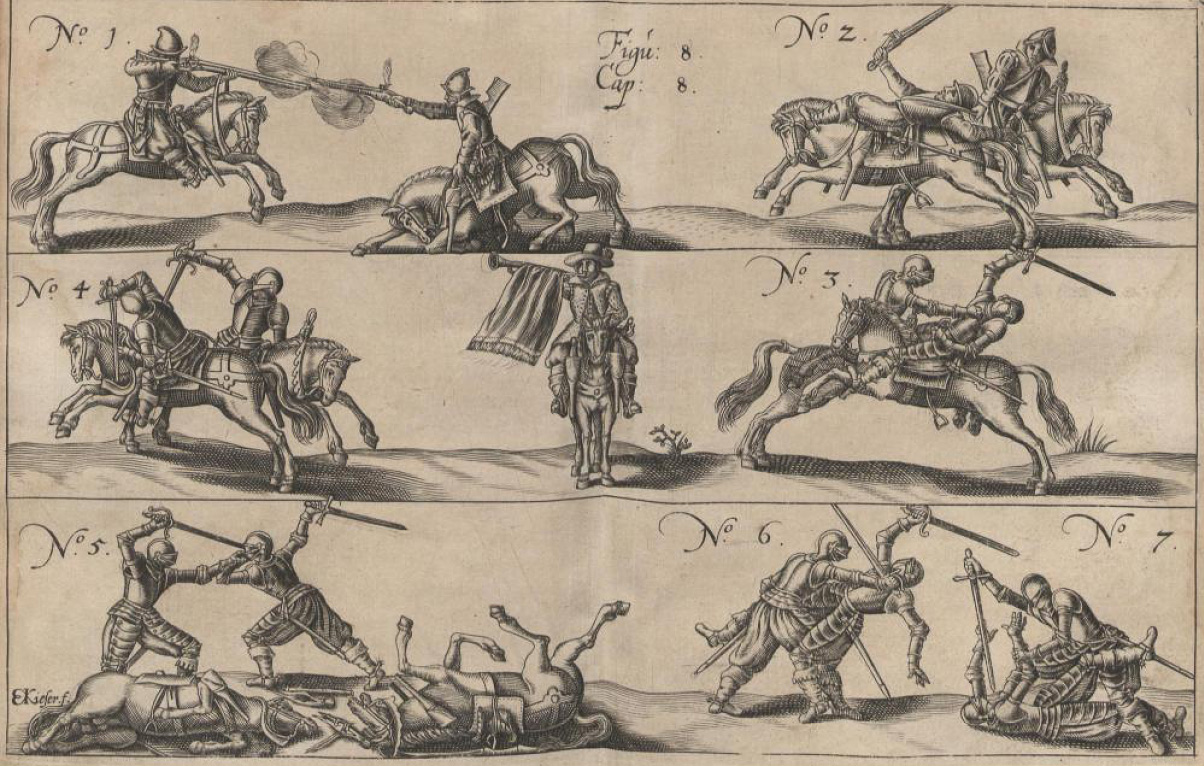
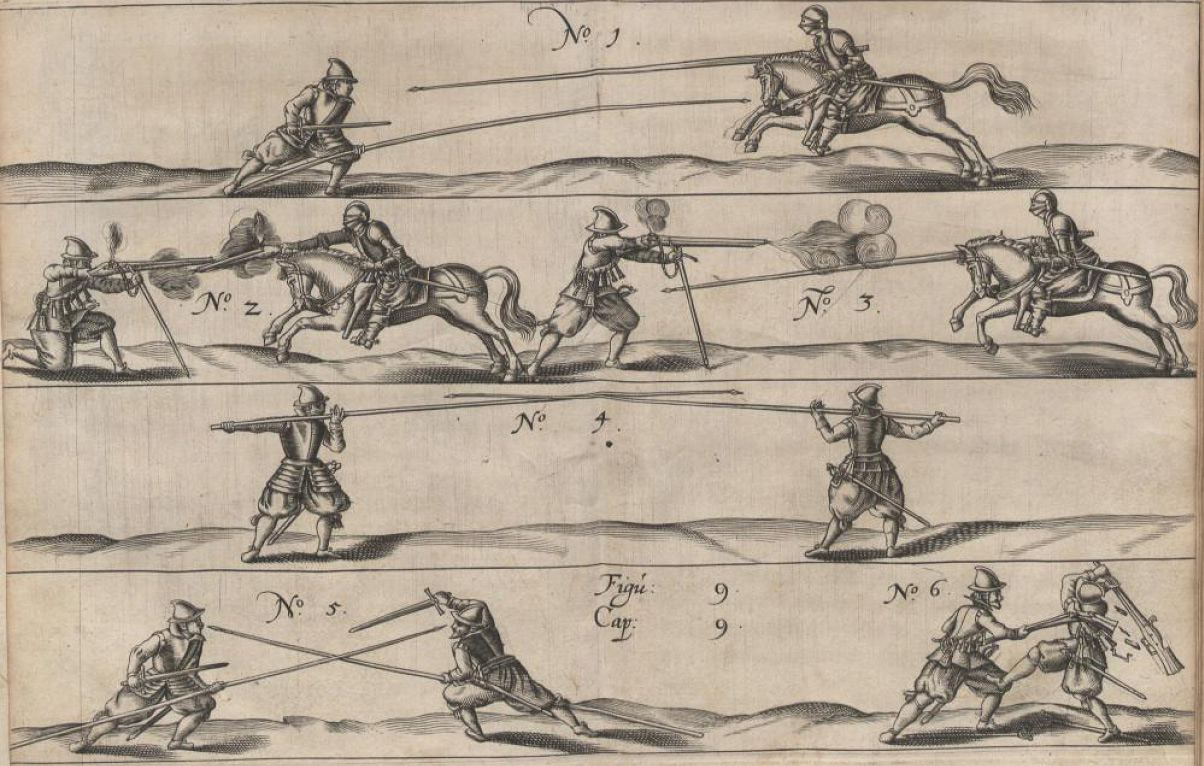
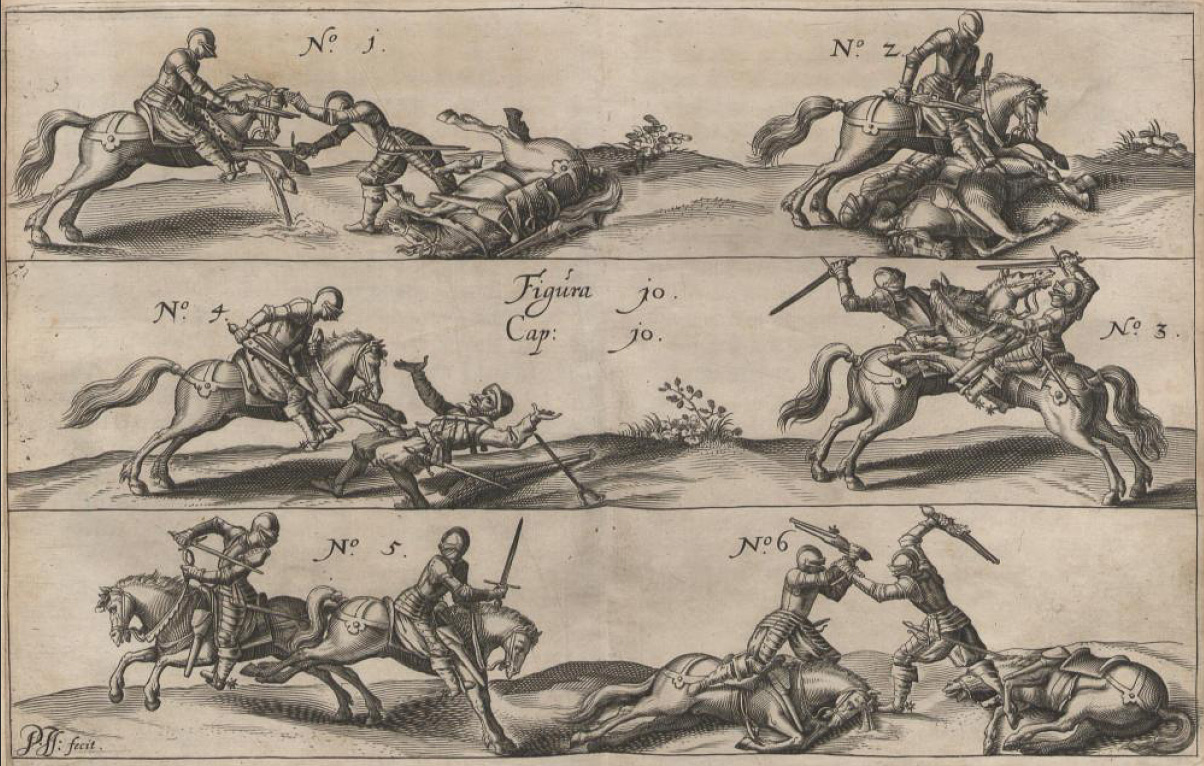
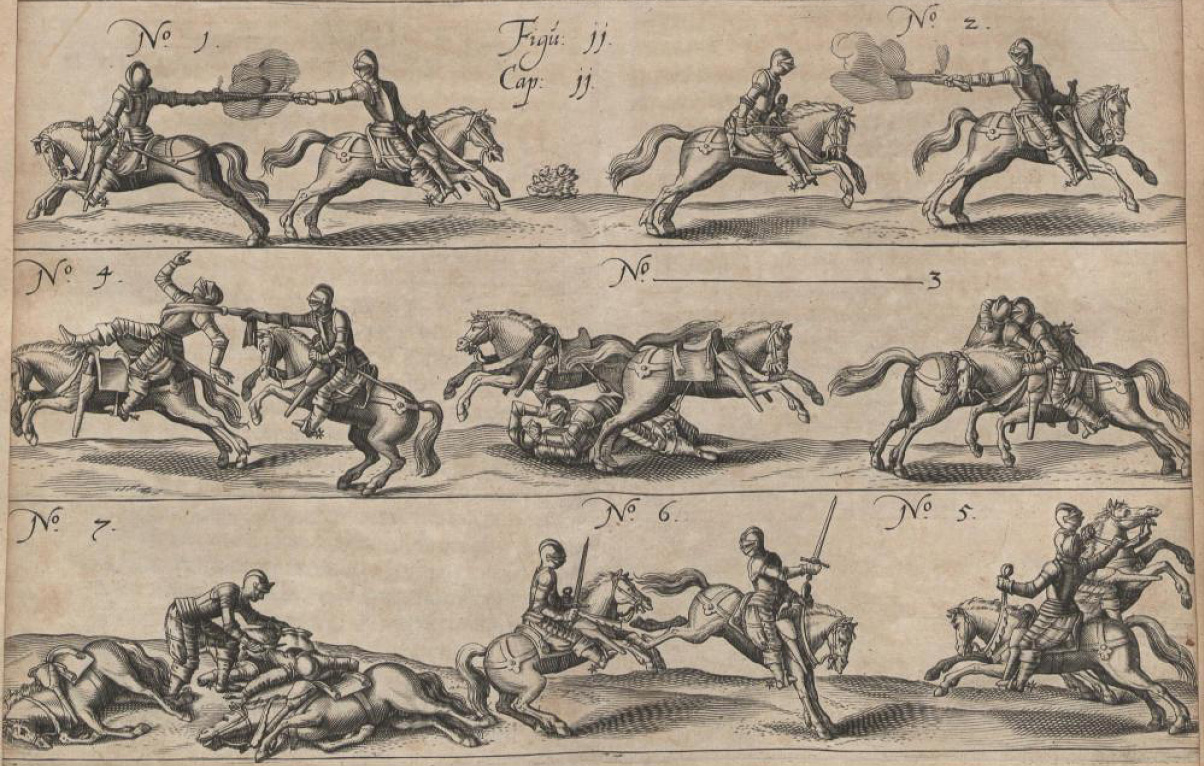
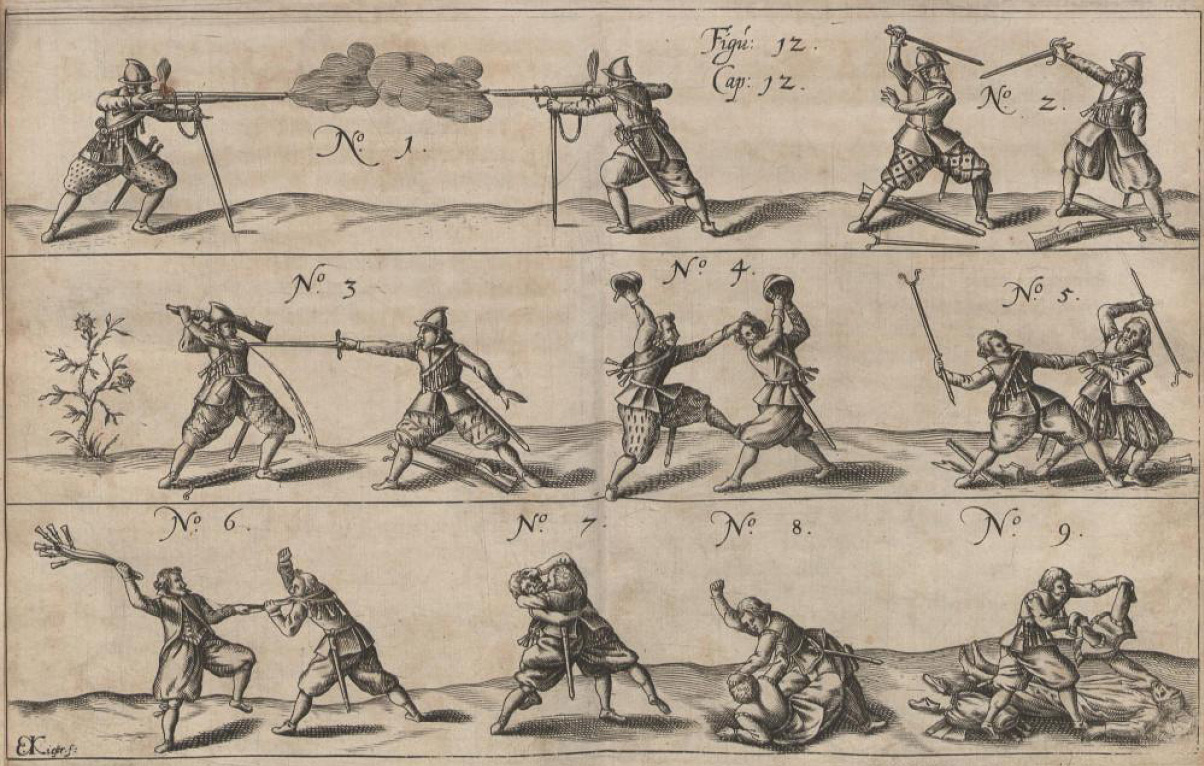
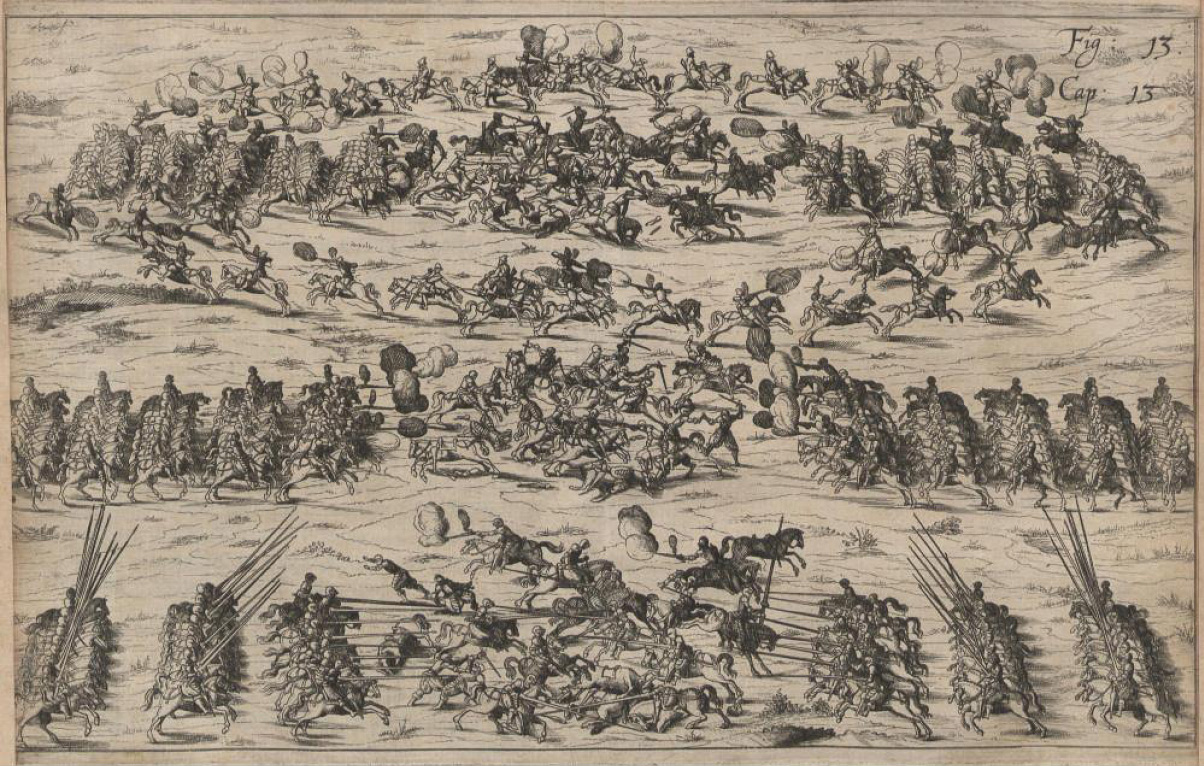
How did one train soldiers and horses for war in the 17th century? These images give a small glimpse of how this was done in Germany, quite possibly in the city of Siegen, somewhere around the first quarter of the 1600s.
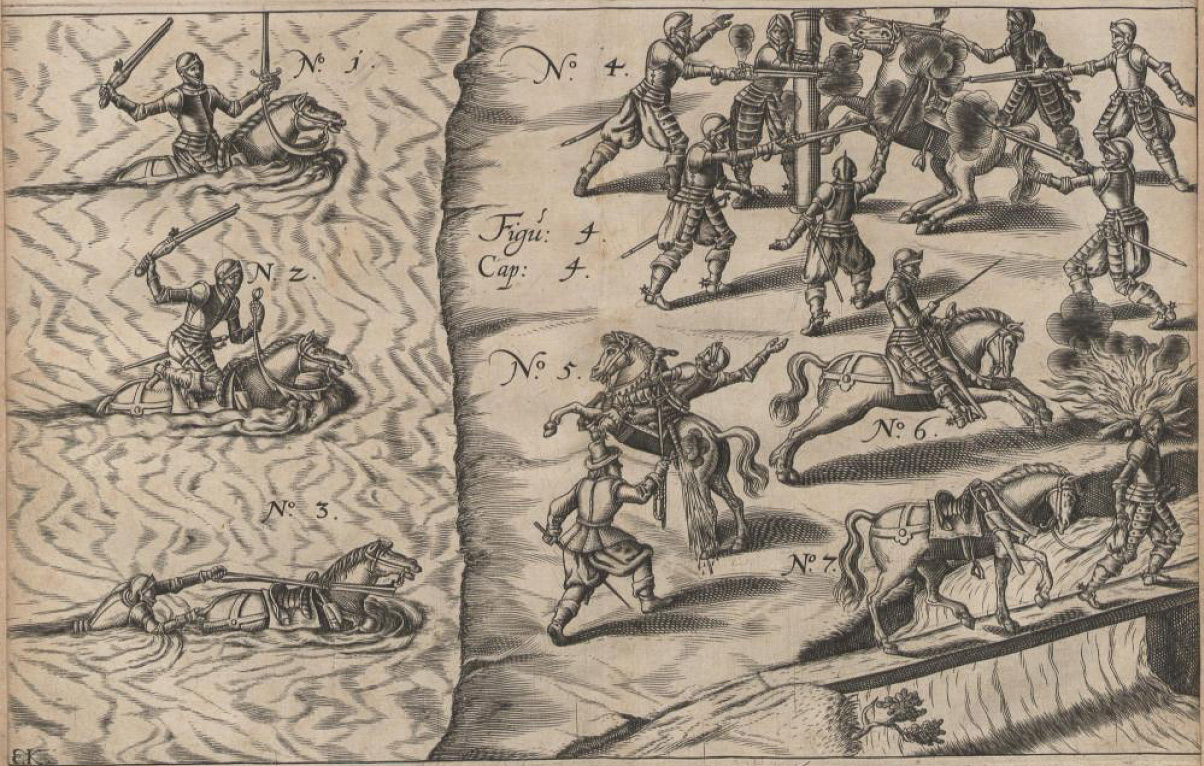 These illustrations are taken from Johann Jacobi von Wallhausen's "Ritter- kunst : Darinnen begriffen, I. Ein trew- hertziges Warnung- schreiben wegen deß Betrübten Zustands jetziger Christenheit" of 1614, and show various forms of practice for war, both for man and horse. In my opinion they are especially interesting as they come from a book written in the breaking period where warfare was moving away from heavy armour and swords in lieu of cannons, pikes and arquebuses. To many it is therefore rather surprising to see "knights" charging each other with rapiers and arquebus in hand.
Von Wallhausen was educated in the Dutch form of drilling military forces, "invented" by Prince Maurice of Orange & Nassau, under whom he served in the Dutch army and to whom he also dedicated several books. Von Wallhausen wrote several books on this topic, which came to be adopted by the Dutch army, but this book contains the most interesting illustrations, in my opinion. This is also the form of drill upon which Swedish King Gustavus Adolphus, with the help of Jakob de la Gardie, expanded upon quite successfully during the 30-years' war and other European wars of the period.
Looking at the illustrations it is hard to tell if the soldiers at first are firing their weapons with gun powder only, but when firing in a circle around the horses, it certainly seems like a way to prepare the horses and themselves.
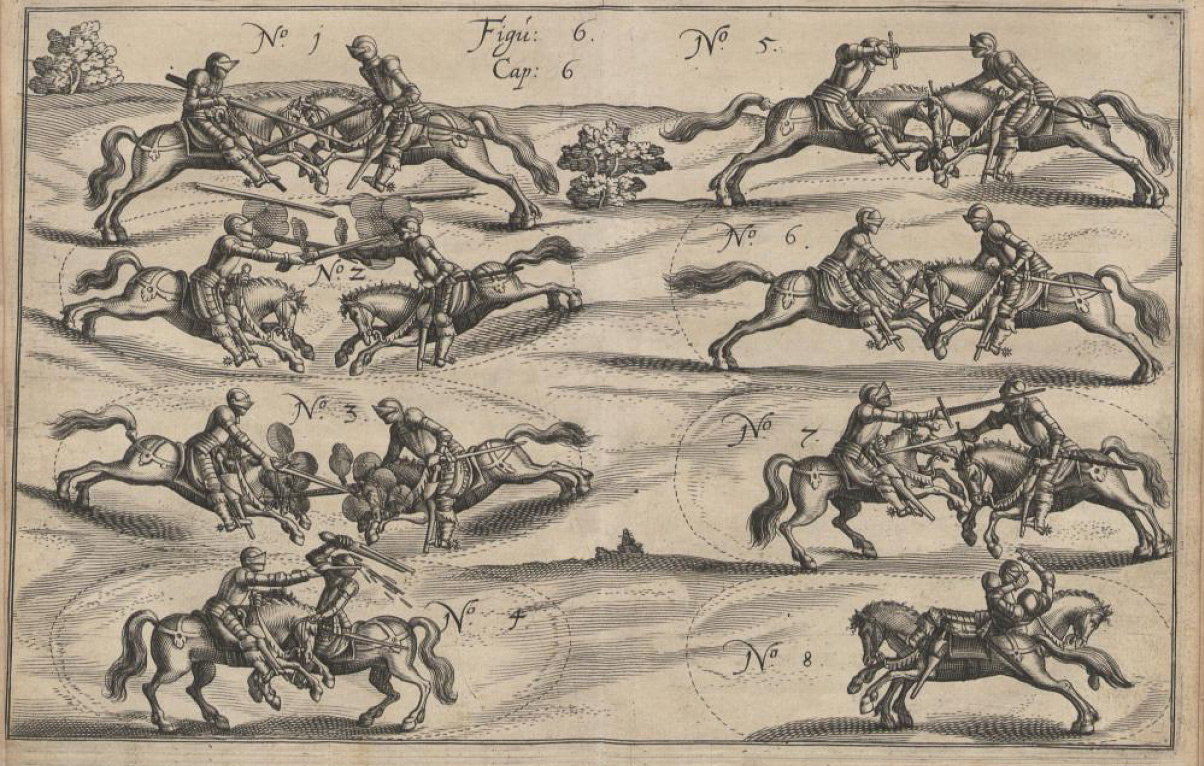 Furthermore, in image 6, top right corner, we see a sword thrust to the opponent's visor.
Other thrusts in the gaps of armour can be seen in image 8 on the bottom and mid left.
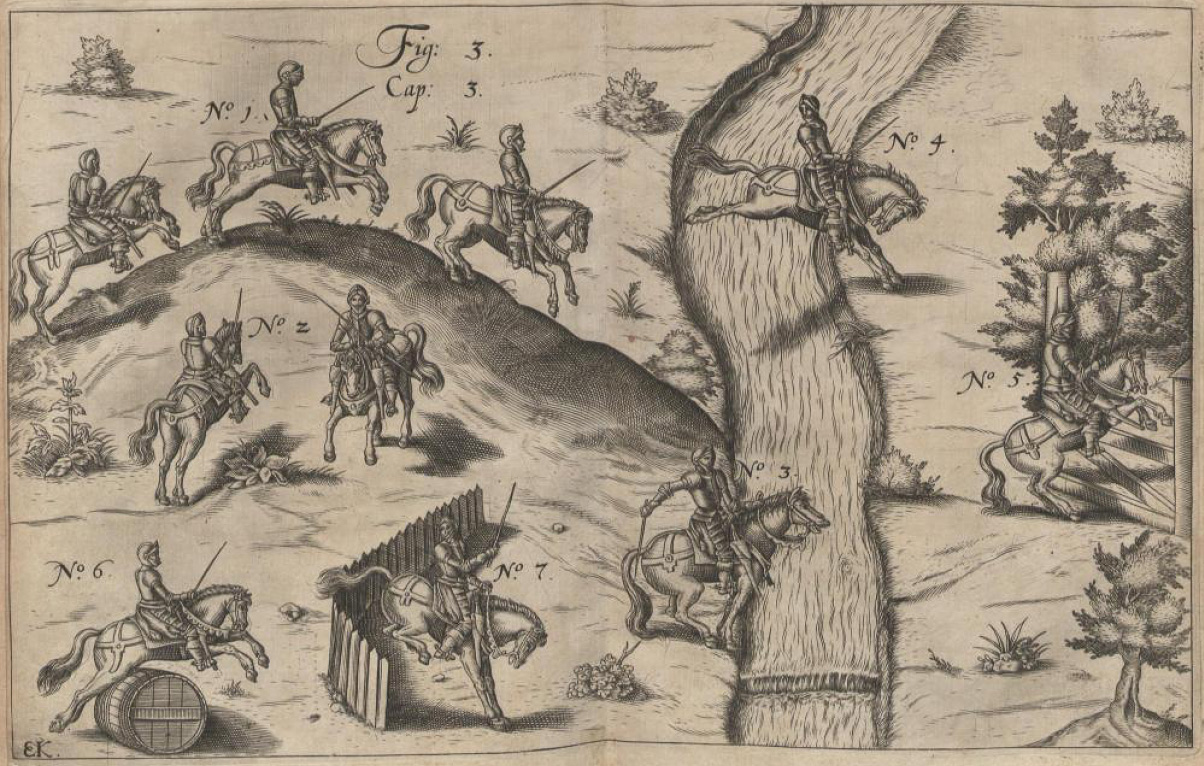
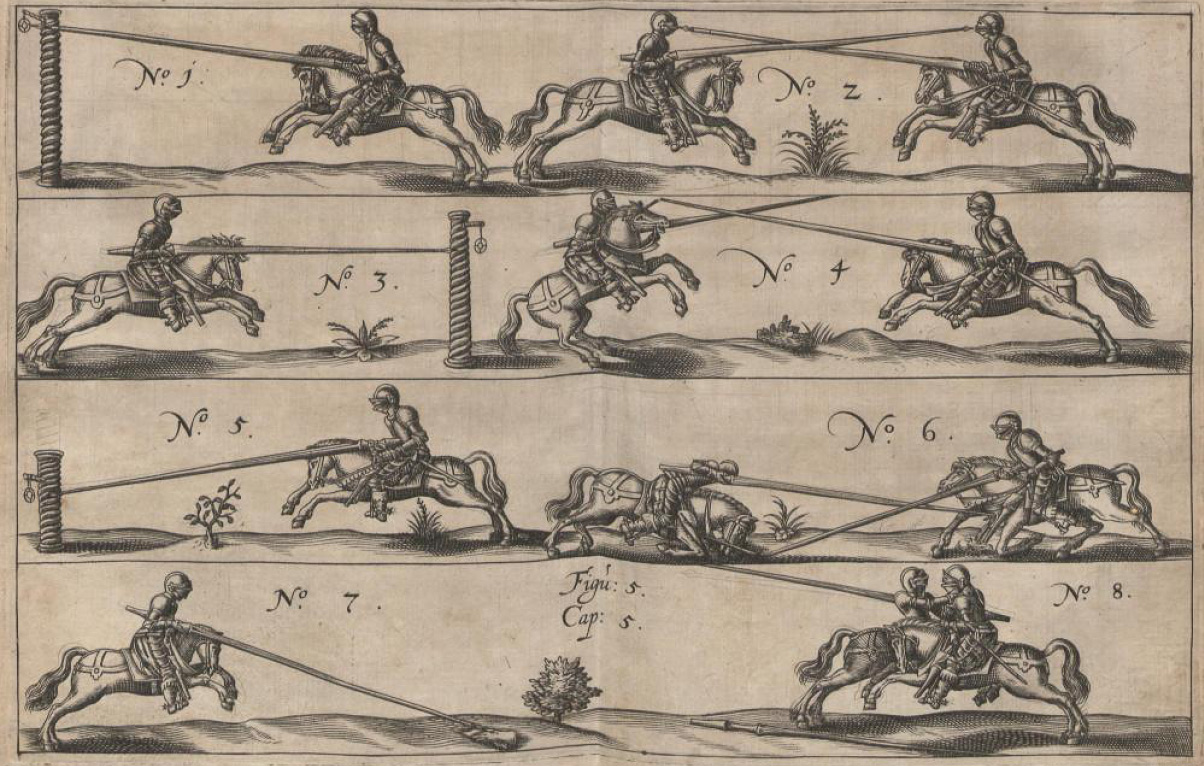
These images, as with so many other Renaissance books are packed with very interesting details. Amongst other things, you can more or less clearly see practice for:
- Getting on (or off) the horse with one arm only (and even no arm).
- Training the horse to move sideways and backwards, while using a stick to touch the horse's head, instead of using the reins.
- Riding defined tracks, both with and without an opponent.
- Riding up and downhill.
- Jumping over various obstacles, through water, close to fire.
- Training the horses balance.
- Using the lance against targets both at rider level and on the ground.
- Attacking the horse.
- Rossfechten with early rapiers.
- Commanding the horse to run over soldiers on foot.
- Commanding the horse to use it's hind legs to kick back at an opponent.
- Grabbing the opponent's reins.
- Shooting of firearms, both on foot and while mounted.
- Use of the firearms, musket fork, ammunition bandolier and helmets as blunt percussive tools.
- Ringen am schwert.
- Cavalry tactics.
Click on the images to see them in full resolution.



Supported by Gothenburg Historical Fencing School
Download the book here: "Ritterkunst : Darinnen begriffen, I. Ein trewhertziges Warnungschreiben wegen deß Betrübten Zustands jetziger Christenheit" (written 1614) Other books by Wallhausen: "Kriegkunst zu Pferd" (1616) "Romanische Kriegskunst" (1616) "Programma Scholae Militaris" (1616)
All documents have been generously provided by: S�chsische Landesbibliothek - Staats- und Universit�tsbibliothek Dresden (SLUB)
This might also interest you: Rabo en La Plaza de Toros M�xico The training of horses for Tournaments and Warfare Horses in the Middle Ages