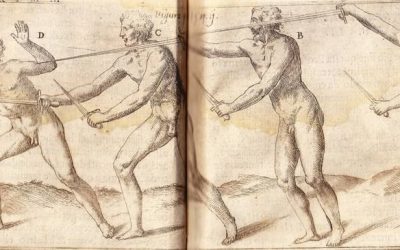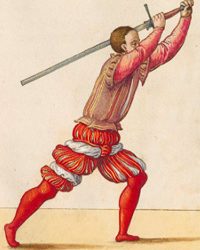
Some fantastic news. Dr. Jeffrey L. Forgeng, the man behind some very good translations, including the two Joachim Meyer treatises, has completed his translation of Pietro Montes Collectanea and you can order it now, here:...
These pages will be focusing directly at theoretical studying of HEMA, both the sources themselves, but also interpretation and similar, close subjects.
You are of course all invited to publish your thoughts here!
The whole site is currently undergoing some radical changes aiming to improve how useful it is to the HEMA community. Please be patient while the work is completed.
The work is expected to take at least a week of fulltime work. Please consider supporting HROARR via Patreon.
Some fantastic news. Dr. Jeffrey L. Forgeng, the man behind some very good translations, including the two Joachim Meyer treatises, has completed his translation of Pietro Montes Collectanea and you can order it now, here:...
Renowned English HEMA instructor Tea Kew recently launched a project to explore the teachings in Sigmund Ringeck's gloss, called the Illustrated Ringeck. The project is described in the following words: "This is a project to produce photographic interpretations...
Long overdue here is a really good article on teaching methodology for HEMA by the great Maciej Talaga. You should read it, both as a teacher and as a student. Thank you for sharing your thoughts, Maciej! On Individual Lessons in HEMA
“An average, foundational knowledge of the past helps us understand the 14th-16th c. Fechtschulen [...] that’s why we need researchers and people vested in recreating and reconstructing the Art of Fencing with a large view of the period in scope of their (the arts)...
Mark, this is that before all things you shall rightly undertake and understand these two things, which are the Before and the After, and thereafter the Weak and Strong of the sword, and then the word “Meanwhile”, whence comes the entire foundation of all the Art of...
Over the years I have spent researching Late Medieval Central Europe, I ran across many unfamiliar words which were either academic terms of art or important jargon from the era. Along the way I composed a glossary for myself to help navigate this strange world,...
Giovanni Alberto Cassani published a military treatise in Naples in 1603.1 In this work he indicates that he was born in the town of Frassinello Monferrato in Piedmont, and that he served in the Spanish army, but little more is known about his life. Most military...
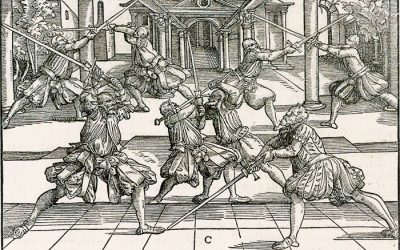
This article will present an analysis of Johann Georg Paschen’s (1628-1678) Kurtze iedoch Deutliche Beschreibung handlend von Fechten auff den Stosz und Hieb (Short though clear description treating of fencing on the thrust and cut) published in 1661 in Sachsen....
In the mid-19th century, not that long after the Belgian war of independence, an experiment was taking place in fencing in the Netherlands. The main proponent of this experiment was Christiaan Siebenhaar (1824-1885), fencing master in the Dutch army.[1] In his own...
Proposition This article proposes that Francesco Novati’s 1902 facsimile reproduction of Flos Duellatorum contains clear stylistic discrepancies that can both elucidate its connection to the original Pisani-Dossi manuscript, and identify connections between the...
Last week, in the same spirit of information freedom that inspired Wiktenauer's creation, I released a free ebook version of The Recital of the Chivalric Art of Fencing of the Grand Master Johannes Liechtenauer, one of the two books produced as part of the 2015...
Though long delayed, this book represents the most complete picture possible of the Liechtenauer tradition of foot combat as it was recorded in the mid 15th century. It’s the text I wanted for my students when I was leading a study group, and I’m happy to finally offer it in print. I hope it serves in some small way to advance the study of Johannes Liechtenauer’s art.
This video was recorded by the MFFG at the 4th Meyer Symposium in Iowa, USA, 2016 and is yet another small sidetrack from the series. It shows two basic techniques with Meyer's quarterstaff; Schnappen and Zucken. Both these techniques absolutely require that you...
This video was recorded by the MFFG at the 4th Meyer Symposium in Iowa, USA, 2016. It is a small sidetrack from the series and shows two basic techniques with Meyer's quarterstaff; Ruck and Truck. Ruck requires a soft or medium bind to work and just won't work with a...
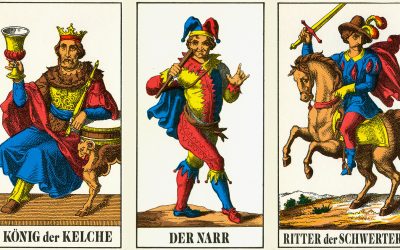
King and Fool - The Vier Leger of Liechtenauer’s Tradition and their relationship with common medieval German archetypes. Exposition includes three things: The letter, the sense, and the inner meaning. (1) “Vier leger allain da von halt und fleuch dye gemain ochβ...
This second video in the Basic Meyer Quarterstaff series brings up a few topics: First of all the stance and angles of the legs, which has been debated a bit with different arguments concerning whether one really should stand and move in such low stances. My firm...
For the last seven years I have dedicated myself to the study of Joachim Meyer's combat arts, and his quarterstaff in particular. In this I have had some very good friends accompanying me over the years in my club, and also some in other parts of the world. While the...
Part One of this article examined the famous judicial duel between Jean de Carrouges and Jacques Le Gris, which was held in Paris in 1386. As it turns out, the description of the event in Eric Jager’s book The Last Duel is rather different from the five surviving...
According to the website Deadline Hollywood, Studio 8 has hired a screenwriter to turn Eric Jager’s book The Last Duel into a script for a Hollywood movie (Fleming, 2015). This tale, published as nonfiction, is an account of the judicial duel in 1386 between Jean de...
Florius de Arte Luctandi is formally designated Ms. Latin 11269 by the Bibliothèque nationale de France in Paris. Based on the content and style of the illustrations, the style of the handwriting, and its probable relation to better-known texts, it was likely created...
The entry on fencing in René François' 1621 encyclopedia is a rich source of terminology and practices common in the fencing salles of this period in which France was developing its own native fencing style as well as trying to rid itself of foreign cultural...
In the introduction to “The Sword and the Centuries” (1901), Alfred Hutton mentions a curious incident. His fencing group in the London Rifle Brigade were invited to Belgium to put on a display of historical fencing. What can we discover about this Belgian event? What follows is an overview some literary detective work that reveals Adolphe Corthey, a man in every way Hutton’s equal and the powerhouse behind late nineteenth century HEMA in France.
Almost exactly a year ago I was lucky enough to be taken on a small journey that has been a long time dream of mine; walking in the footsteps of 16th cent fencing master Joachim Meyer, visiting the city where he spent many years teaching as Fechtmeister;...
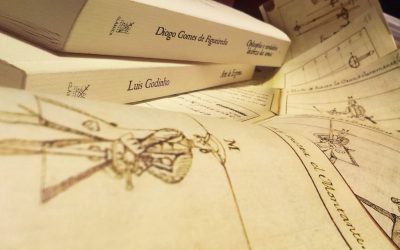
This article gathers a series of notes written while studying the sources on the Iberian montante sword of the late XV century and following centuries. The extant sources are listed and analysed. Different approaches to teaching this weapon’s handling are described, stressing those who can provide a context for its use.
This article shall group Joachim Meyer's Ringen into collections of similar throws. Hopefully this will better aid the modern student in learning Meyer's Ringen. All of the throws have been rewritten into a modern step-by-step method from Dr. Forgeng's translation...
“Finding yourself assailed by enemies, and supposing there are many of them, the situation demands nothing less than attacks like those of a desperate man, that is to say you must enter liberally into the fray” Giuseppe Colombani (1711) The scarcity of advice for...
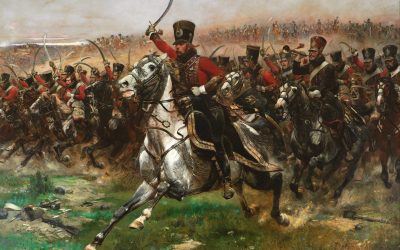
Continuing with his four part series on The use of the saber in the army of Napoleon, Dr. Bert Gevaert now presents the fourth part: Wounds caused by the saber Introduction Soldiers and officers in the army of Napoleon led a life full of risks and sometimes the...
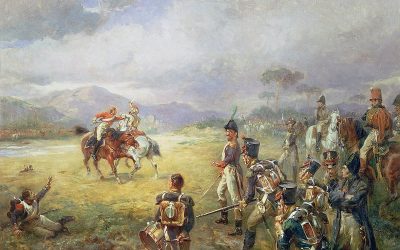
Continuing with his four part series on The use of the saber in the army of Napoleon, Dr. Bert Gevaert now presents the third part: Individual martial prowess on the battlefield Stories about individual swordsmen are the most fascinating ones and in this...
Continuing with his series on The use of the saber in the army of Napoleon, Dr. Bert Gevaert now presents the second part: Antoine Fortuné de Brack: Avant-postes de cavalerie légère (1831) De Brack was a French officer who participated in several military campaigns of...
Here is a rough diagram that tries to explain the core mechanics that go through all of Meyers fencing and which are the foundation for the footwork and weapon mechanics, regardless of weapon. These mechanics apply to pretty much all of Meyer's teachings, with...
“The sword is the weapon in which you should have most confidence, because it rarely fails you by breaking in your hands. Its blows are the more certain, accordingly as you direct them coolly; and hold it properly.” - Antoine Fortuné de Brack ([1831], 1876, p. 51)...
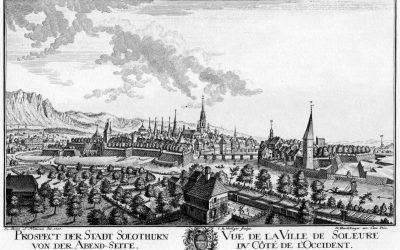
Introduction: So what happened to the Second Estate? Most of my own HEMA-related historical research in the last ten years has been focused on the Free Cities and City States which are the origin of so many of the known fencing manuals. But that...
Our personal goals in studying HEMA are varied, complex and individually quite different. For myself, I try to understand how and why it is designed the way it is as a martial art. That means it is not enough mimicking the movements described in the manuals, since...
Back in the end of May this year we had the honor to be invited to the internationally renowned event and tournament of SKUNKS, which is organized annually in Rybnik, Poland. SKUNKS is primary a tournament but there are workshops that precede the main fighting part....
There are many reasons why I devote much of my time and my energies on what Joachim Meyer has exhibited in his treatises. But the main reason I decided to get closer to the Freifechter of Basel was the desire to learn his method of two-handed sword, and possibly the...
Long overdue I've finally posted my booklet on the Meyer quarterstaff, a weapon also used to train spear and halberd. It is tied to the workshops I have been travelling teaching and contains both the core concepts including footwork and body & weapon mechanics as...
For practitioners of German longsword it is fairly commonly known that with some stances and cuts we should put our thumb against the flat of the blade. For example Meyer tells us "From there deliver a Thwart ... so that your thumb always remains below on...
This time I will speak rather briefly about stances and the ideas behind them. This does not just apply to the longsword, but is applicable to all weapons. So, without further ado, let's dig into it. Joachim Meyer describes stances in relation to the first attack...
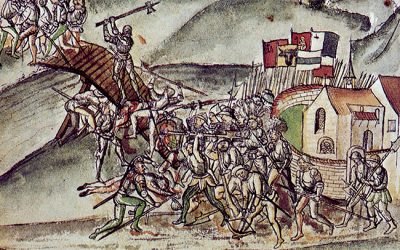
Below are three versions of the Fencing Ordinance of the Swiss town of Solothurn, first the original, then the English translation, then a German re-statement. All translations are mine. At the time, Solothurn was a full member of the Swiss Confederacy and a very...
We all share the same love for our personal and shared discoveries of a forgotten European martial arts tradition and studying it we all learn to know some important and commonly known names like Liechtenauer, Fiore, Ringeck, Talhoffer, Kal, Vadi, Marozzo,...
Although not originally planned to be included in this series, I decided to add an article on a topic that deserves special treatment, since to best understand several of the core teachings of this whole article series it is vital to understand this...
Here's the workshop on Joachim Meyer's quarterstaff held by me and my fellow GHFS member Mattias Moberg at the HEMAC Florentia event in March, in Florence, Italy. It has been edited down from a 3 hour workshop into a 1 hour...
Over the last five years, I’ve given several workshops in both South Africa and Europe focused on sequencing the teaching of techniques from Joachim Meyer’s “Gründtliche Beschreibung… der Kunst des Fechtens”[i]. In my view, each section in Meyer’s 1570 text contains...
This week we will be taking advantage of one of the greatest benefits from reading somewhat later masters, like Joachim Meyer and George Silver, by looking closer at a subject that most early treatises speak little of; tactics. We will here only focus on the...
A 'new' book from the 15th Century has just been translated and published. The book was originally published in 1458 by Pope Pious II, originally known as Aneas silvius Piccolomini. translated by Robert Brown. Pious II was famous for being one of a handful of...
http://vimeo.com/85750549 by Roland Warzecha and friends! Amazing!
http://www.youtube.com/watch?v=lkZxlyQ_VP8 Just to remind you of the beauty of one of the few still living European martial arts; Portuguese Jogo do Pau. If you ever get a chance to try it then take it. It is well worth it.
Throughout history going all the way back from at least medieval times up until modern military bayonet training a diagram typically depicting four crossing lines with seven or eight directions of cutting or striking have been used. The fact that it has changed little...
This week's article will be talking about the topic of various ways of counterstriking against an attack. Different masters and traditions handle this differently, depending on their core tactics and views on what distances and timing to use as the basis for the...
This time we will start moving into somewhat more unexplored and unmapped territory, working with various clues gathered from different places, to help us guide the way through the (wide) distance. The working theory is that there is a certain distance that many of us...
Before I go any further, I would like to point out that this is physically a very nice book. The copy I got was a small hard back with a blue cloth bound cover. Good paper, a nice weight in the hand but not too heavy, it endured a rather intensive reading and period...
Time for part 3 in the Onion Article Series, this time taking a closer look at the parts of the weapon and how it relates to handling of distance and tactics. Simply put there are two ways of approaching the issue of controlling the opponent; either physically or...
Continuing with part 2 in the Onion series of articles we will now focus on the topic of controlling the fight, or lack thereof and regaining it. In German terms these concepts are called Vor, Nach and Nachreissen. These concepts are hugely important, but at the...
For the last year or so I have been working on a group of primarily longsword exercises based on studying fechtmeister Joachim Meyer's holistic system for training and fighting, focusing on the dussack, longsword and staff in combination with some...
Note: This is a working document and will continuously be updated as we work with our interpretations of Joachim Meyer's dagger teachings. Similarly to how I worked with his staff teachings I will attempt at systemizing the principles and techniques taught and...
Designing a sword of mid 14th century style using a system of geometric drawing that is inspired by surviving plans of medieval gothic architecture. Please visit my site at peterjohnsson.com for more information about this principle of design and the hypothesis that...
Here is an excellent lecture on Fiore Furlano de Liberi, Ludwig von Eyb and more, by Michael Chidester, held at Fechtschule America 2013. Well worth watching, no matter if you focus more on the "Italian" or "German" aspects of the fighting arts. Great work, Michael!...
This short movie shows a glimpse of the world of the Collegiate Fencing, the still living child of the Fechtschule tradition. https://www.youtube.com/watch?v=OLbr0BtfA7s For more reading, look at the excellent article An overview of German collegiate fencing...
Here's a good clip from John Clements focusing on an often forgotten aspect of swordfighting; the dynamic gripping of swords. Some time ago I wrote an article about this and although I find it lacking today, I still think it has some good images, even if I really...
On this day, 443 years ago, Fechtmeister Joachim Meyer published his magnificent fencing treatise 'Gründliche Beschreibung der Freyen Ritterlichen und Adeligen Kunst des Fechtens'. Exactly one year later, on February 24th 1571, he died from sudden illness, while...
Very nicely produced video on footwork, from La Sala delle Armi.
In my opinion the dussack doesn't quite get the recognition it deserves in the historical fencing community, despite the fact that it was a highly important weapon in the old fencing guilds. It is not really studied properly, probably due to many commonly believing...
"Ey fåår Fächtare Krantz förn ändas Manlige Strijden. The Fighter shall not receive the wreath until the manly battle is ended (according to the rules)." -2 Tim 2:5. I sincerely consider tournament fighting to be vital to our efforts in recreating the...
This article is written to accompany the recent article about the mysticist, and possibly even fencer and a Freyfechter, Heinrich Agrippa. If you haven't read the article, it is suggested you do so, before reading this article. Die Rose (the...
From at least as far back as the early to mid 1400s, all the way up until about the French Revolution in 1789, longsword fencers have been practicing with fechtschwerter, or what is today commonly called federschwert, a specific sword type with a flared...
It has been debated regarding to what extent Meyer was inspired by the Italians, the Napolitans and the Bolognese fighting systems and although there appears to be ties to this, exactly what they are and how they came about is still unclear. However, comparing...
This project will collect all of Joachim Meyer’s personal advice on fighting, stripping away all techniques instead focusing on fighting principles, tactics and strategies. Anyone is welcome to join us in this project. The results will be posted here continuously...
Here's an old but still always relevant question for us HEMA practitioners to ask ourselves: When we read the old fencing treatises, should we only practice what we are told to do in the treatises or should we try to continue with the next step of playing with it and...
To understand the body mechanics involved in a technique we not only have to train our bodies so we are strong and agile enough, we also need to use tools that work together with our bodies in the appropriate manner. This may seem obvious but is really not and it can...
The Guards https://www.youtube.com/watch?v=J2cG-U1mLfI Here are the main guards of Joachim Meÿer's Halben Stangen: 1. Oberhut (left) 2. Gerader Versatzung (or Mittelhut) 3. Unterhut 4. Wechselhut (Not really a "main" guard, but a key stance) 5. Oberhut (right) 6....
Well there is a right Vom Tag, and a middle one... so there has to be a left Vom Tag as well, hasn't there? We make all master cuts cut from both sides, so it is simple logic, right? Looking through the manuscripts and manuals of the 15th and 16th century, it is...
No, it's not the hottest, new move on the dance floor. It's just the old High Guard as it is taught by Master Liechtenauer and his disciples, may God rest their souls. But how should it be done, really? The guard Vom Tag is a simple thing when you look at it super-...